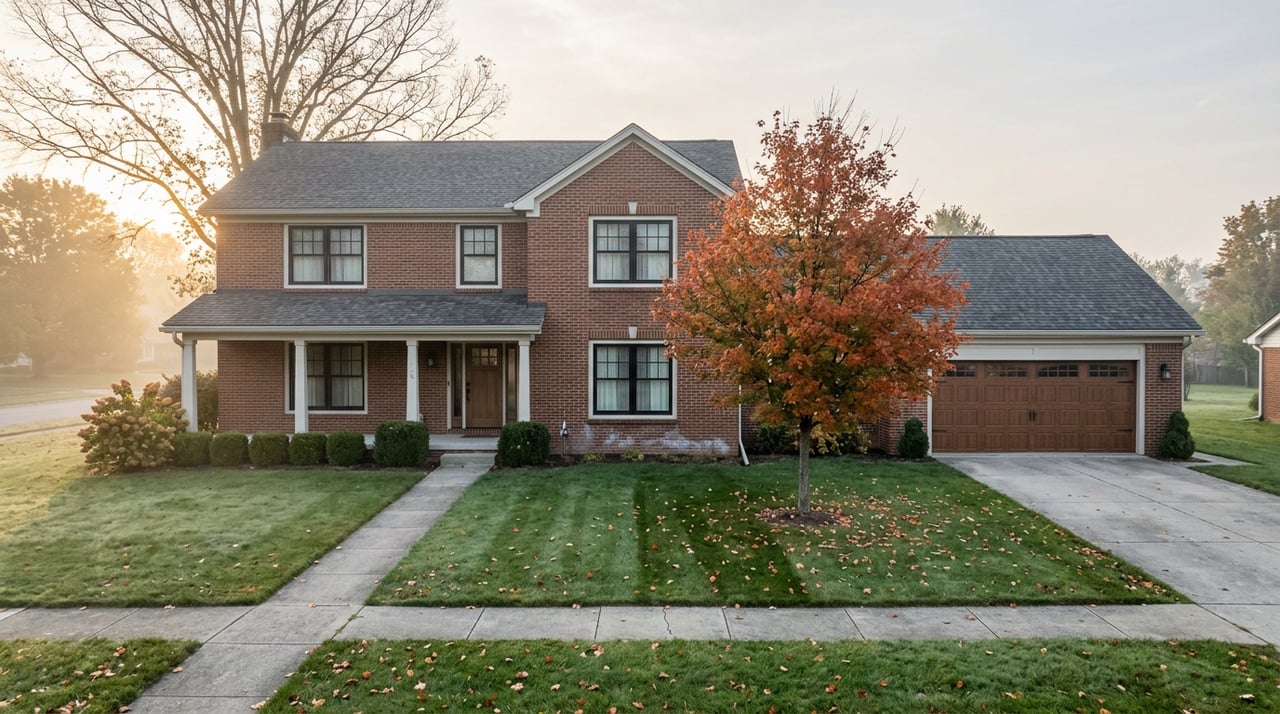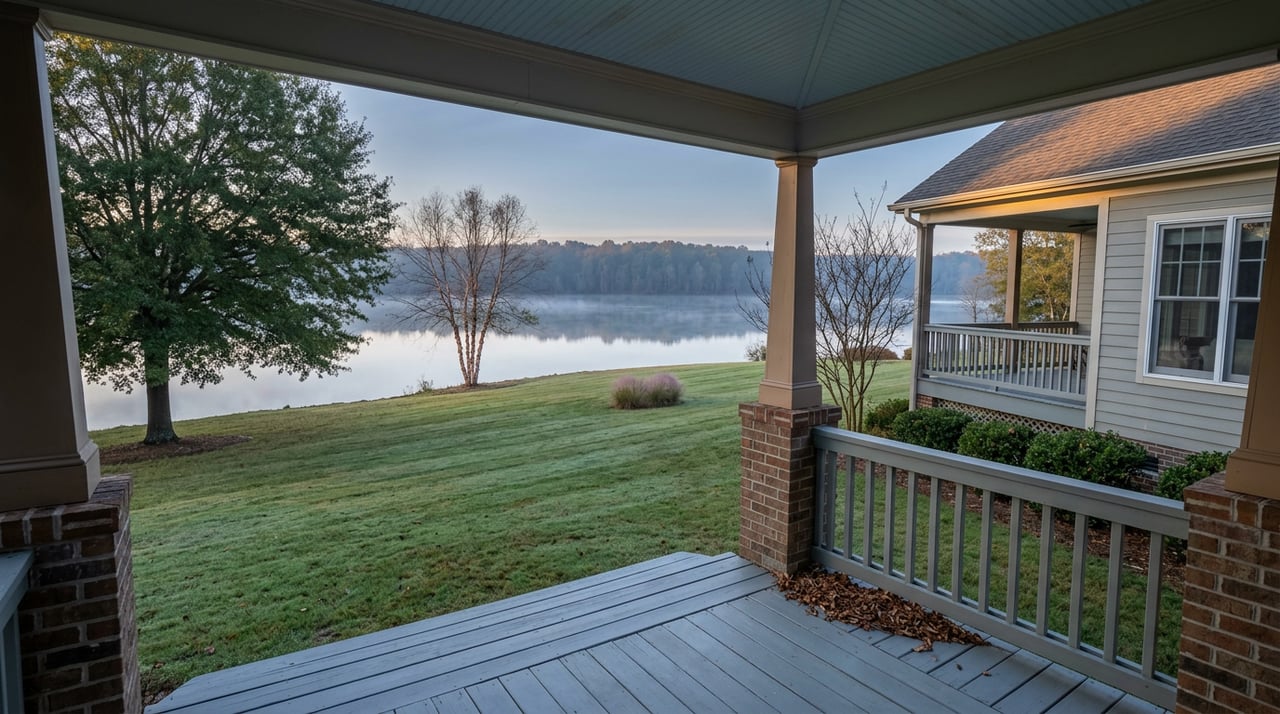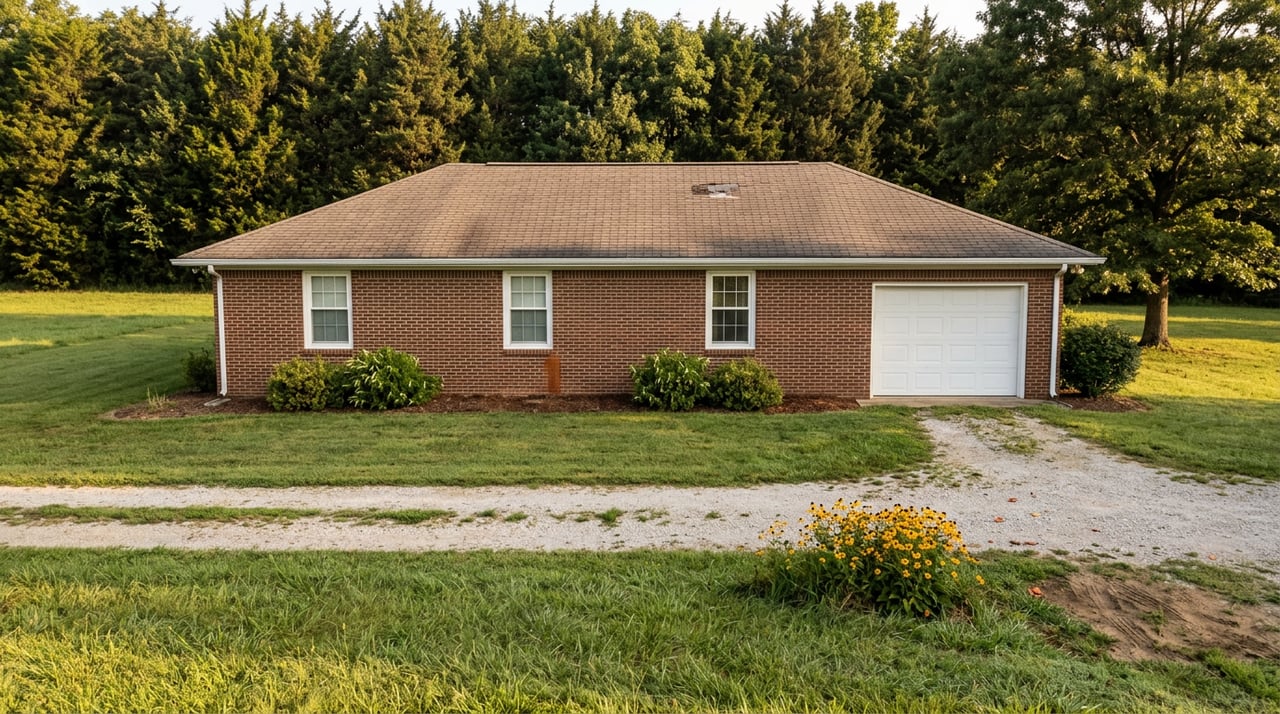
A five-tract farm off Old Estill Springs Road recently came up for auction, a mix of open pasture, wooded edges, and a shared pond, minutes from downtown Winchester, Estill Springs, and Tims Ford Lake. Road frontage on both ends, a couple of building sites, the kind of ground that shows up in Franklin County every season. Nothing about the property is unusual for this part of Southern Middle Tennessee.
What is unusual, and what most sellers weighing auction against a standard listing never quite grasp, is that the transaction itself works under different rules the moment it goes to auction. One document that almost every home seller in Tennessee assumes is mandatory simply is not required here. That single fact changes more about the deal than most people realize, and it is worth understanding before deciding which path fits a piece of land, a farm, or an estate.
The Form That Doesn't Get Filed
Tennessee's Residential Property Disclosure Act requires anyone selling residential real estate to either complete a Property Condition Disclosure Statement or sign a disclaimer saying the buyer takes the property as-is. Most sellers fill out the disclosure form. It covers structural issues, mechanical systems, water damage, known environmental hazards, the kind of detail a buyer relies on before signing a contract.
Public auction sales are exempt. So are court-ordered sales, transfers out of foreclosure or bankruptcy, and new construction covered by a written warranty. The exemption is written directly into the statute and repeated on the official disclosure form itself, which lists auctions among the situations where a seller is not required to complete it.
That does not mean every disclosure obligation vanishes everywhere. Tennessee's sinkhole disclosure law is written as a standalone requirement that survives even when a seller in a standard sale opts for the as-is disclaimer instead of the full form, which is a good reminder that a few specific disclosures live outside the general disclosure act and are worth confirming with an auctioneer or attorney case by case. A licensed auctioneer also carries a separate duty under state auctioneer rules to disclose the buyer's premium, in writing and out loud, before bidding starts. What disappears at auction is the general condition disclosure that a buyer normally leans on to learn about a leaking roof, a failing well, or old wiring.
For a family selling a childhood home with known issues, or an executor settling an estate where nobody currently living has ever occupied the house, that exemption is not a loophole. It is often the reason auction makes sense in the first place. Nobody has to swear to conditions they cannot verify.
A Different Deal, Not Just a Faster One
It helps to see the two paths side by side, because the differences run deeper than timeline.
| Traditional Listing | Auction Sale | |
|---|---|---|
| Condition disclosure | Required (form or disclaimer) | Exempt under state law |
| Financing contingency | Common, negotiated in contract | Typically none, buyer arranges financing beforehand |
| Earnest money | Often 1 to 5 percent of price in Middle Tennessee | Often 10 to 20 percent of the total purchase price, due same day |
| Buyer's premium | None | Usually added to the winning bid, commonly in the 5 to 10 percent range |
| Price discovery | Set by seller, negotiated | Set by competitive bidding on auction day |
| Typical closing | 30 to 45 days, contingency-dependent | Around 30 days, fixed and non-negotiable |
A conventional Middle Tennessee buyer typically puts down earnest money in the 1 to 5 percent range, and that money is usually refundable if an inspection turns up a real problem or financing falls through. An auction buyer is putting down something closer to 10 to 20 percent of the full purchase price, non-refundable once the gavel falls, with no financing contingency to fall back on. If the winning bidder cannot close, that deposit is at risk.
This is the part sellers underestimate. Auction is not a faster version of the same transaction. It shifts risk onto the buyer in exchange for speed and certainty for the seller. That trade is exactly why it works well for farmland, estates, and unusual property, and exactly why it is a poor fit for a move-in-ready home in a subdivision where buyers expect the normal protections of financing and inspection contingencies.
What An Acre Near Winchester Actually Costs
Anyone comparing land prices in Franklin County runs into a strange problem fast. Ask three sources what an acre costs here and you get three different answers, and none of them are wrong.
One land data aggregator lists the average Franklin County farmland listing at $695,980, working out to roughly $18,126 per acre. A second puts the countywide inventory at more than $48 million spread across roughly 600 acres of land for sale, with individual listings averaging $466,890, a figure pulled from a broader mix that includes small building lots alongside working farms rather than farmland alone. A third source puts the average Franklin County farm listing at $613,917.
None of these numbers describe the same market. A five-acre building lot with road frontage and a pond view prices completely differently than a 150-acre working farm three miles further from town, and averaging them together produces a figure that describes neither. The countywide average is a blend of very different products, not a signal of what any specific tract is worth.
This matters directly for someone deciding between listing and auction. A seller who anchors expectations to a countywide average, without accounting for tract size, road frontage, tillable acreage versus wooded ground, and proximity to Winchester, Estill Springs, or Tims Ford Lake, is negotiating against a number that does not describe their property. Auction sidesteps that guesswork entirely. Instead of guessing at a list price from a blended average, competitive bidding on auction day lets the market set the number in real time, based on the actual tract, not a countywide blend.
Where This Fits, and Where It Doesn't
Auction earns its place for specific situations: farm and land parcels where per-acre pricing is genuinely uncertain, estates where nobody currently living can vouch for the home's condition, properties that need to sell within a defined window, and unique or as-is property where a buyer expecting full disclosure protections is the wrong buyer to court in the first place.
A move-in-ready home with a seller who knows the property's condition well is usually still better served by a traditional listing, where the disclosure form protects both sides and buyers can use financing and inspection contingencies without the pressure of a fixed auction date.
For families sorting through an estate, or landowners holding acreage they've never lived on, the paperwork difference above is often the deciding factor before price ever enters the conversation. Team members like Mitchell Lawrence, who focuses specifically on auction transactions, spend a lot of time walking executors and landowners through exactly this distinction before a single sign goes in the ground.
A Few Questions Worth Asking Directly
Does an auction seller ever have to disclose anything? The general condition disclosure form is exempt at auction, but a handful of narrow statutory disclosures, like Tennessee's sinkhole disclosure rule, sit outside that main disclosure act and are worth confirming with your auctioneer or attorney for your specific situation. A licensed auctioneer is also required to disclose the buyer's premium in writing and announce it before bidding begins.
Can a winning bidder back out after the auction? Generally no, not without forfeiting the earnest money deposit. Because most auction sales carry no financing contingency, buyers are expected to have funding arranged before they bid.
Is the buyer's premium negotiable? The percentage is set and disclosed before the auction starts, not negotiated bidder by bidder. Serious buyers factor the premium into their maximum bid rather than treating it as a surprise add-on afterward.
Does a property still need to be marketed and shown before an auction? Yes. Auction properties are typically previewed on a scheduled date or dates before bidding, the same as a traditional listing would be shown, just on a compressed calendar tied to the auction date.
If you're sorting through an estate, sitting on acreage you're ready to move, or simply trying to figure out whether your property is a better fit for a conventional listing or a timed auction, that's exactly the kind of decision Mike Winton Realty & Auction helps Franklin County families work through every week. Buy, Sell, or Auction, the conversation starts with figuring out which path actually fits your property.